



GitHub Slams the Brakes on Private Vulnerability Reports
Drowning in AI-generated bug reports? GitHub has a radical answer: Stop accounts from reporting them. GitHub’s new limits on bug reports aren’t a solution to the AI bug-report flood. Anything but! They’re an admission that the traditional security-disclosure workflow, with human maintainers in the loop, simply doesn’t scale. The scarce resource is no longer discovering […]

AWS Benchmark Aims to Reduce Number of False Positives Found by AI Vulnerability Scanners
Amazon Web Services (AWS) has developed a benchmark that can be used to test whether a model can distinguish real vulnerabilities from code that looks risky but is actually safe. The Deception Benchmark was created following an evaluation of the capabilities of 12 models from five different providers. In all, the benchmark includes 14,822 samples […]

TeamPCP Supply Chain Attack Leads to CrowdSec Source Code Being Stolen
CrowdSec says attackers stole source code from about 170 private GitHub repositories after a TanStack npm supply chain attack exposed an OAuth token tied to a former employee.

US District Court Decision in AI’s Favor Worries Open-Source Developers
A federal appeals court handed GitHub, Microsoft, and OpenAI an important win in the first major appellate ruling over how AI coding tools can use open-source code. As we all know, all the AI code-generating programs learned their lessons largely from open-source code. So a group of anonymous open-source plaintiffs argued that GitHub Copilot and […]

StackHawk Delivers Wingman to Fix Vulnerabilities as Developers Write Code
StackHawk this week launched Wingman, an artificial intelligence (AI) tool that makes it possible for application developers to automatically fix vulnerability issues as code is being written. Wingman is designed to install into Claude Code, Cursor, GitHub Copilot, Codex, and Antigravity. It scans the live application, interprets findings, and fixes vulnerabilities in a way that […]
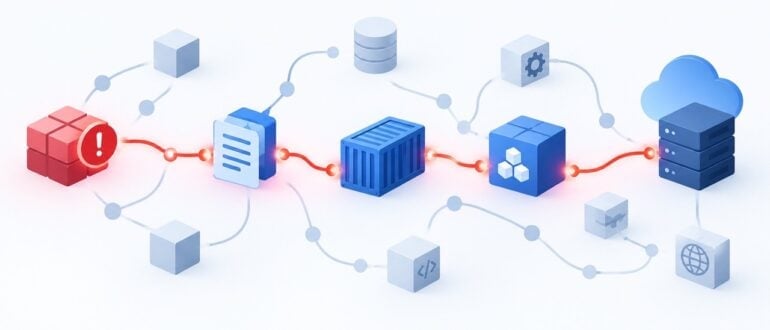
Why AI Agents Shouldn’t Guess at Vulnerability Exploitability
Vulnerability prioritization is not a language problem. The safest agent architectures use models to interpret and explain, while deterministic systems traverse the evidence. Ask a security team a simple question: Of the vulnerabilities your scanner reported this morning, which ones can actually be exploited in production? The honest answer is often that nobody knows yet, […]

Atlassian Aims to Fill Context and Governance Gap for AI Coding Agents
Atlassian today extended the capabilities of its portfolio to provide teams of artificial intelligence (AI) coding agents with the level of context needed to build and deploy applications in production environments at much higher levels of scale. Code Context, built on Atlassian’s Teamwork Graph, makes it possible for AI coding agents to generate more reliable […]

JFrog CEO: No One Cares About Source Code Anymore
JFrog CEO Shlomi Ben Haim told approximately 500 software engineers today that in the age of artificial intelligence (AI) no one will soon care much about source code anymore. Speaking at the company’s swampUP 2026 conference, Ben Haim said AI tools are now creating executable binaries directly without relying on source code that historically existed […]

CrowdStrike Moves to Secure Software Supply Chains at the Endpoint
CrowdStrike today at its Fal.con 2026 conference extended its reach into the realm of software supply chain security with the addition of an offering that blocks malicious open-source packages at the endpoint before their embedded code can run. Bartley Richardson, chief AI and autonomous systems officer for CrowdStrike, said Real-Time Supply Chain Attack Protection is […]

JFrog Moves to Secure Agentic Engineering Workflows
JFrog today at its swampUP 2026 conference added a zero touch remediation capability that ensures the most secure version of a binary is provided even when application developers request a version that has known vulnerabilities. Additionally, JFrog is adding tools and capabilities to secure artificial intelligence (AI) agents that have been embedded within a DevOps […]

Cybersecurity Researchers Uncover Flaw in Google AI Coding Tool
Cybersecurity researchers from Pillar Security this week revealed how a prompt injection inserted into a GitHub repository was used to gain Editor-level access to an internal Google Cloud project using a flaw in the command line interface (CLI) of an artificial intelligence (AI) coding tool that Google provides. Dan Lisichkin, a cybersecurity researcher for Pillar […]

Sonar AI Agent Discovers Vulnerabilities Hidden in Business Logic Workflows
Sonar today made available an artificial intelligence (AI) agent designed to discover vulnerabilities and business logic flaws that pose the greatest risk to an organization should they be exploited. The SonarQube Hunter Agent first analyzes an entire codebase to find three categories of flaws: broken access control, business-logic vulnerabilities, and authentication or session-management issues. Satinder […]

Hackers Target Popular arrayref Rust Crate in Supply-Chain Attack
Security researchers are sorting through a complex, stealthy, and fast-moving supply-chain attack aimed at pushing information-stealing malware by compromising the account of the maintainer of multiple Rust crates and introducing four more attacker-owned crates. In addition, researchers with Wiz wrote that there also appears to be overlap with supply chain campaigns run by nation-state actors […]

npm v12 Shuts Down a Popular Malware Trick — But the Threat Isn’t Going Away
For years, one of the easiest ways to sneak malware onto a developer’s machine has been to hide in plain sight. Install a package from npm, and any lifecycle script bundled with it runs automatically — no review, no approval, no second look. Attackers have known this for a long time, and they’ve used it […]
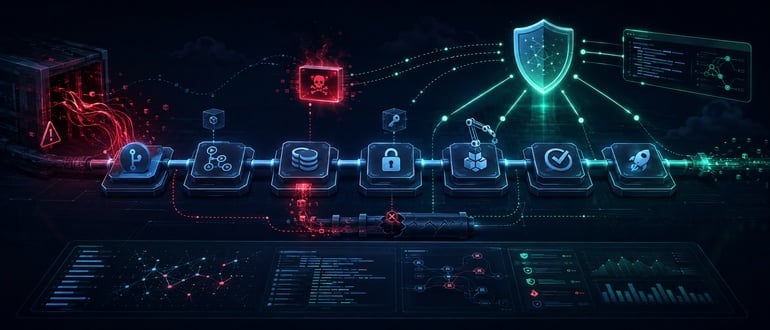
GitHub Sharpens CodeQL’s Eye on Actions Workflows and Modern JavaScript
GitHub Actions pipelines have become one of the quieter attack surfaces in software development. They pull in third-party actions, cache dependencies, and pass secrets between jobs, often without anyone reviewing the workflow file as closely as they’d review application code. That gap is exactly where cache-poisoning and output-clobbering attacks live, and it’s why GitHub keeps […]

Cloudsmith Extends Policies and Controls to Secure Application Binaries
Cloudsmith this week revealed it has expanded the policy management and continuous risk detection capabilities it makes available within its software artifact management platform to now include policy templates, cooldown policies, and expanded evaluation triggers. Alison Sickelka, vice president of product for Cloudsmith, said these additions to the platform will make it simpler to prevent […]

Microsoft’s GitHub Hit by Major Outage as AI-Driven Demand Strains Infrastructure
GitHub, the Microsoft Corp.-owned code hosting platform serving more than 180 million developers, is still reeling from a widespread outage on Monday that severely disrupted software development pipelines globally. The hours-long incident was the latest in a relentless series of reliability failures for a service struggling to keep pace with an unprecedented surge in artificial […]
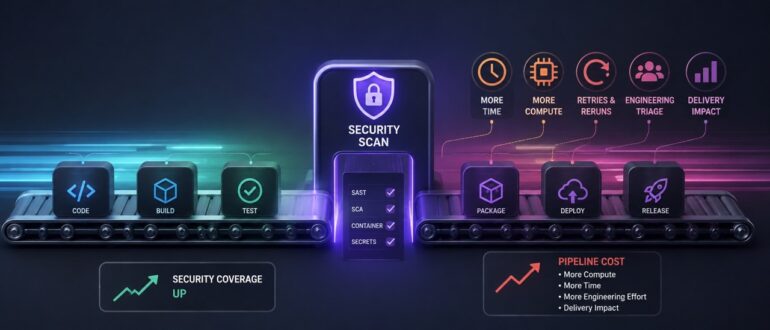
Is Your New DevSecOps Tooling Reducing Work Or Just Adding to It?
Security belongs in the software delivery pipeline. The harder question is where, how often and at what cost. Many pipeline teams eventually add security scanning to CI/CD, and relatively few go back afterward to measure what it actually cost the delivery process. Security coverage went up. Something else changed too, and it is rarely measured […]

ProjectDiscovery Brings Open Source AI Testing to Vulnerability Discovery
ProjectDiscovery has made available an autonomous security testing platform that leverages an open source artificial intelligence (AI) testing framework to detect and validate vulnerabilities at a lower total cost. Company CEO Rishi Sharma said version 1.0 of the Neo platform is also available via a cloud service that makes it possible for DevSecOps teams to […]
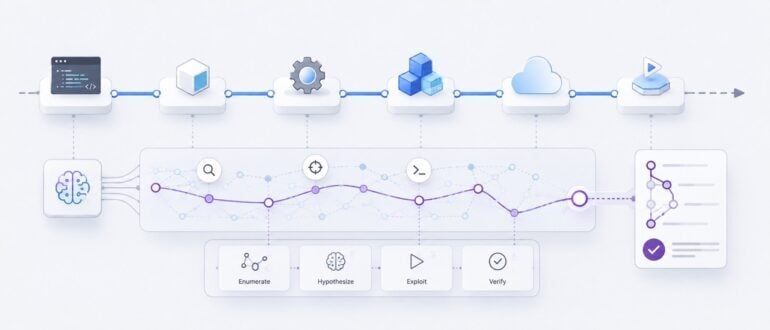
Why CI/CD Security Testing Is Going Autonomous (and Why It Should Stay Local)
Continuous integration and delivery changed the tempo of software. Teams merge dozens of times a day, infrastructure is redefined on every commit, and a new build can reach production in minutes. Security testing never caught up with that tempo. It still lives in two modes that both fight the pipeline instead of moving with it. […]

HackerOne Extends Platform Reach to Remediate Source Code Vulnerabilities
HackerOne has added a remediation capability to its H1 Platform that reduces the amount of time required to remediate validated vulnerabilities and other weaknesses affecting specific lines of source code. Nidhi Aggarwal, chief product officer for HackerOne, said H1 Remediation combines artificial intelligence (AI) and crowdsourced research to identify the root cause of issues that […]

AWS Extends DevSecOps Reach to AI Coding Tools from Anthropic and OpenAI
Amazon Web Services (AWS) this week at the Black Hat USA conference revealed it is working with both Anthropic and OpenAI to integrate their respective coding tools with a service it has developed that makes available artificial intelligence (AI) agents to help application developers write more secure code. Launched earlier this year, the AWS Continuum […]
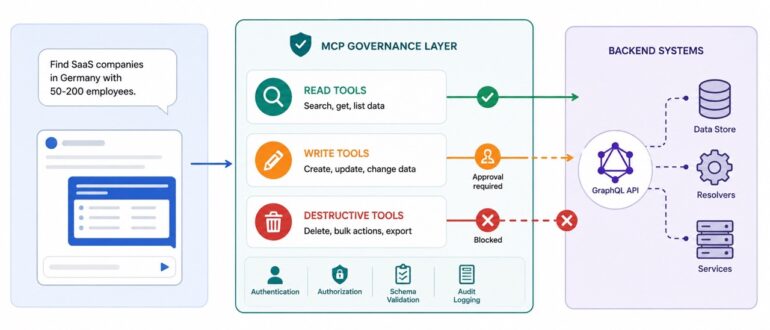
From API Integration to Agent Governance: What Backend Teams Need to Know About MCP
Many MCP projects begin with an existing API and a simple request: expose one backend capability to an LLM client. The quickest route is to wrap an endpoint as a tool and connect it to Claude or another MCP host. Users can then ask for data in natural language instead of navigating a fixed interface. […]
Showing the 24 most recent articles. Additional archive pages are not yet available.