

Teams that run AI coding agents at scale keep hitting the same wall. The model is capable. The agent still gets things wrong, retries, and burns tokens along the way.
The usual cause is missing context. An agent working in a large monorepo, or across dozens of repositories, sees a slice of the codebase. It doesn’t know which services depend on the file it’s changing, which pipeline broke last week, or who owns the code. So it goes looking. Each round trip costs time and tokens. Sometimes the context window fills, and the agent gives up. Sometimes it ships a change the team later reverts.
GitLab’s answer is GitLab Orbit, which became generally available on Oct. 29 for Premium and Ultimate customers. It’s live on GitLab.com now. Self-Managed and GitLab Dedicated follow in the coming weeks.
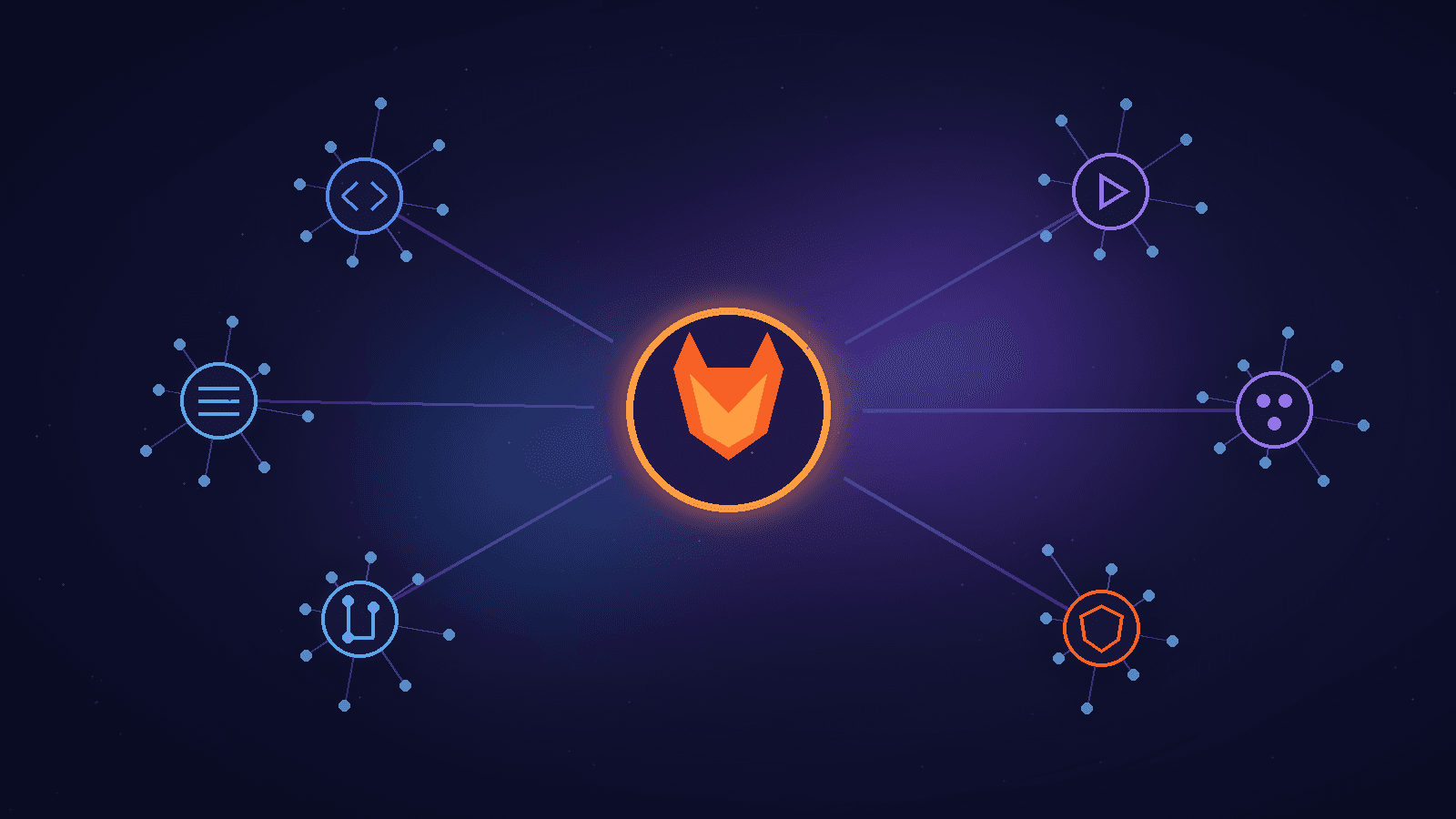
Orbit is a context graph for the software lifecycle. It connects code, merge requests, work items, pipelines, vulnerabilities, and ownership in one view that updates as teams ship. Agents query the graph instead of rebuilding the picture themselves.
“AI agents are only as accurate and efficient as the context they work from,” says Manav Khurana, chief product and marketing officer at GitLab.
The headline numbers come from GitLab’s own testing, and they’re “up to” figures. On the same tasks with the same model, agents connected to Orbit produced up to 45x fewer hallucinations, which meant fewer retries, and used up to 4.5x fewer tokens.
The more interesting result comes from a customer. Compare the Market tested four context approaches for an AI code reviewer on 79 real merge requests. The Orbit-grounded reviewer matched about 70% of expected inline comments. A retrieval-augmented generation (RAG) approach matched about 58%, which was worse than giving the reviewer no added context.
“We tested it against retrieval-augmented generation and a few other approaches across real merge requests, and the gap was clear: better comment placement, better summaries of what actually changed. RAG, which we’d assumed would be the natural solution, ended up performing worse than no context at all,” says Ryan Harvey, head of AI engineering at Compare the Market.
That finding deserves attention. Many teams reach for RAG by default when they want to ground an agent in their own code. One customer test doesn’t settle the question. But it suggests structured relationships between code, changes, and pipelines may matter more than pulling in more similar-looking text.
Under the hood, Orbit indexes GitLab data and default-branch code into a property graph stored in ClickHouse. It runs as a separate service beside GitLab. Results follow existing GitLab permissions, so an agent sees only what the user behind it can see, and there’s no second permission model to maintain. Because the data already lives in GitLab, you don’t need to build connectors or ETL pipelines.
Orbit works natively with GitLab Duo Agent Platform. Third-party agents, including Claude Code, Codex, Cursor, and OpenCode, connect through the Model Context Protocol (MCP) or the GitLab CLI. GitLab says more than 3,500 organizations have used Orbit since the beta, running more than 280,000 agent queries.
For platform teams, the value is in the questions Orbit can answer in one query. Which production services are exposed to a given vulnerability? What will a proposed change affect across the group? Where is a CI job failing across projects, and which ones have drifted from shared CI configuration? Which projects still depend on an old library before a migration? Those answers used to take hours of digging, if teams could get them at all.
Mitch Ashley, vice president and practice lead for CIO & Technology Buyers and Software Lifecycle Engineering at The Futurum Group, sees a strategic play behind the technical one.
“Context is becoming surface for effective AI agent behavior. Whoever tells an agent what a change touches, who owns the code, and what broke last week shapes what that agent does next,” Ashley says. “GitLab already holds that context, and serving it over MCP puts GitLab in the path of agents it didn’t build.”
Pricing follows usage, not seats. GitLab sells Orbit in query packs that form one shared pool for the whole organization. Each pack costs $30 per user per month in GitLab Credits and adds 1,000 queries. Usage beyond the pool runs about $0.03 per query. A 30-day free trial is available through GitLab account teams.
There are caveats. Orbit draws on data GitLab already holds, and GitLab says it can extend to other sources. Ashley says that reach will decide how much Orbit matters.
“Coverage is the test. Many enterprises run code on more than one platform, and context that stops at GitLab’s edge leaves agents guessing about the rest,” he says. “Watch whether Orbit exchanges context with systems GitLab doesn’t own.”
The benchmark figures are also GitLab’s. Teams should track token use and retry rates in their own environment before and after turning it on.
The bigger shift is in how the industry thinks about agent performance. For two years, the debate centered on which model to use. As agent counts climb, cost and accuracy depend just as much on what an agent knows when it starts. GitLab is betting that the platform holding the full record of how software gets built is best placed to supply it.

Frequently Asked Questions
1. What is GitLab Orbit, and why does it matter?
2. How much can GitLab Orbit improve AI agent performance?
3. Can GitLab Orbit work with third-party AI coding agents?

Tom Smith (C. Thomas Smith III) is a veteran digital analyst and content strategist who spent more than four years as a Research Analyst at DZone.com (part of Devada), where he conducted thousands of interviews with technology executives and authored roughly 1,500 articles that generated more than 10 million page views across topics including AI/ML, Agile, APIs, cloud computing, DevOps, IoT, Java, Kubernetes, microservices, and security. He holds an MBA in Marketing from Duke University's Fuqua School of Business and a B.A. in Political Science from Duke. Smith later worked as a content strategist and technical writer at Cognizant, including stints on Google's Bard (now Gemini) and Meta's AI Business Assistant (MAIBA) "seed" content teams, where he helped train and evaluate large language models. Over his career, he has interviewed more than 4,000 technology executives across AI, cloud, data, security, and storage sectors. He now writes independently through Insights From Analytics and is a contributing writer across multiple Techstrong Group properties, including DevOps.com, Digital CxO, Cloud Native Now, PlatformEngineering.com, and Techstrong.ai, where he covers AI agents, enterprise AI infrastructure, and emerging developer tools.